
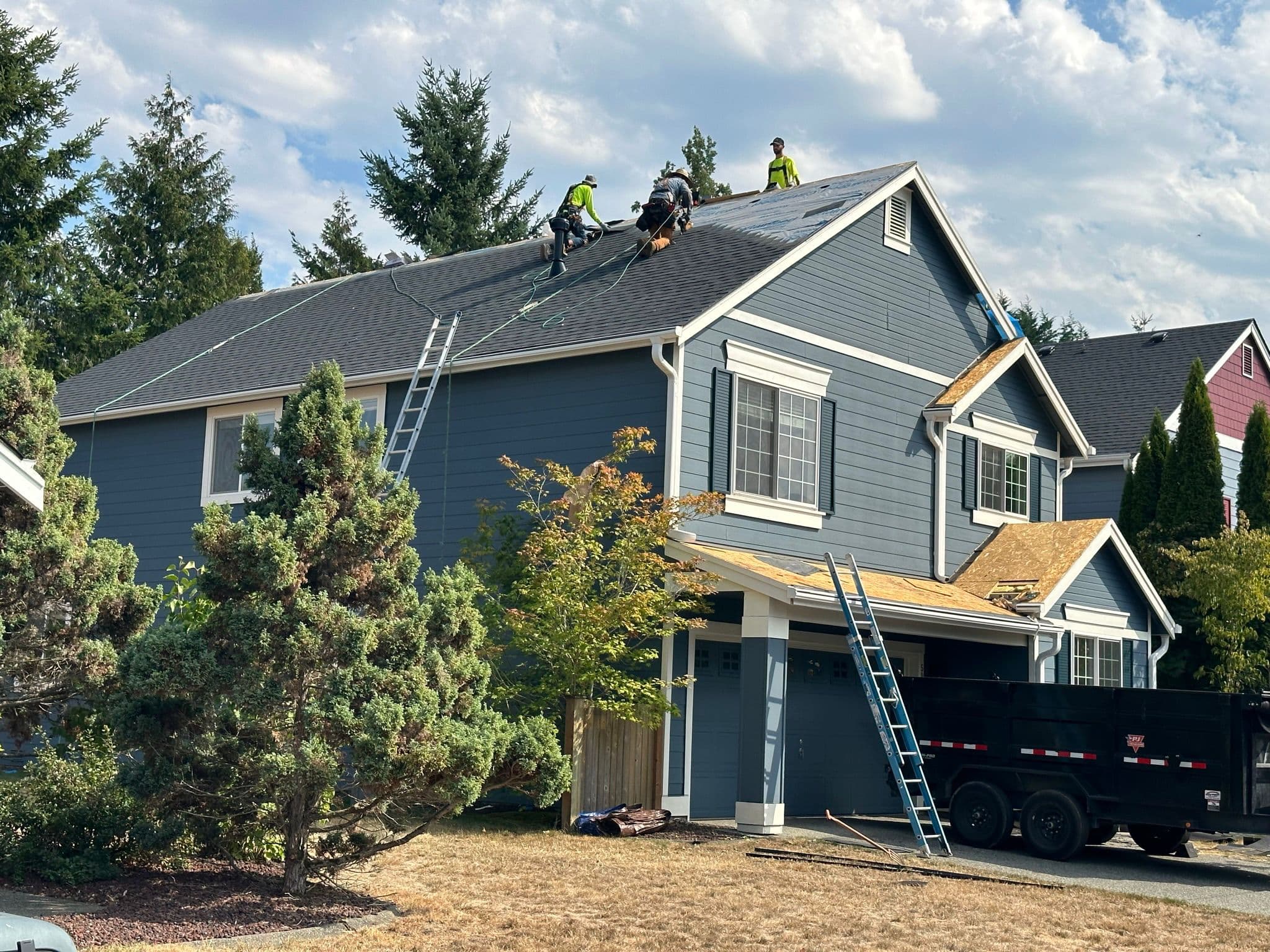
Roof underlayment is the water-resistant layer installed over the roof deck and under shingles or metal panels. It is backup protection when water gets past the outer roofing. King Roof Care installs new underlayment, plus ice-and-water protection where the roof requires it, during roof replacements in Kirkland, Bothell, Everett, Issaquah and Redmond, WA. This guide covers synthetic and felt options, metal roofs and what to ask in an estimate.
What Roof Underlayment Does Between the Deck and the Roofing
Roof underlayment sits directly on the roof deck, which is the sheathing nailed to the rafters or trusses. Shingles, shakes or metal panels go on top of it. The outer roofing sheds most of the water, and the underlayment is the second line of defense underneath.
Synthetic Roof Underlayment vs. Felt: Material Trade-Offs
Synthetic roof underlayment and asphalt-saturated felt are the two most common sheet underlayments for pitched roofs. Both go on before the finished roofing, but they behave differently on the roof and during installation.
| Trait | Synthetic underlayment | Asphalt-saturated felt |
|---|---|---|
| Base material | Woven or spun polymer sheet | Paper or fiberglass mat saturated with asphalt |
| Weight on the roof | Generally lighter per roll | Generally heavier per roll |
| Tear resistance during install | Generally more tear-resistant | Can tear more easily, especially when wet or brittle |
| Behavior when wet | Generally resists wrinkling | Can wrinkle or buckle if it absorbs moisture |
| Walking surface | Varies by product; some have textured faces | Varies; can be slick when wet |
| Exposure before covering | Set by the manufacturer; often longer than felt | Set by the manufacturer; often shorter |
| Breathability | Varies widely by product | Varies by product |
Metal Roof Underlayment: What Changes Under Panels
Metal roof underlayment has to suit conditions that differ from a shingle roof. Metal panels can expand and contract with temperature, and some panel profiles leave space between the panel and the deck where condensation can form.
Ice-and-Water Protection and Where Underlayment Meets Flashing
Ice-and-water protection is a self-adhering membrane that bonds to the roof deck and seals around nails. Roofers use it in areas where water tends to collect or move sideways, rather than across the entire roof in most cases.
How Underlayment Fits Into a Roof Replacement, Step by Step
Roof underlayment installation is one stage in a larger sequence, and its quality depends on the steps before and after it. King Roof Care's roof replacement process on the Eastside follows the order below, based on the scope the company publishes.
- On-site inspection of the roof, the attic and the ventilation, noting anything that affects the work.
- Written estimate listing the exact scope and materials before any work starts.
- Tear-off and haul-away of the existing roofing material.
- Inspection of the roof deck, with damaged sheathing replaced as needed.
- New underlayment, plus ice-and-water protection where the roof requires it.
- Flashing at valleys, walls, chimneys and other roof penetrations.
- Starter course, the finished roofing and ridge caps.
- Full cleanup once the work is done.
Mistakes That Cause Underlayment Rework
Roof underlayment mistakes are hard to see once the roofing is on, which is why they tend to surface later as leaks or stains. Knowing the common errors helps you ask better questions before the job starts.
- Installing underlayment over wet, soft or damaged sheathing instead of replacing the bad decking first.
- Reversing laps so an upper course tucks under a lower one, which lets water run behind the sheet.
- Leaving underlayment exposed longer than the manufacturer allows before covering it.
- Skipping ice-and-water protection at valleys, eaves or penetrations where the roof requires it.
- Using an underlayment the shingle or metal panel manufacturer does not list for that system.
- Fastening with the wrong fasteners or spacing for the product, which can let the sheet tear or lift in wind.
- Leaving wrinkles or bunching that telegraph through shingles or interfere with panel seating.
- Patching around chimneys and skylights without integrating the flashing with the underlayment laps.
What to Compare in a Roof Underlayment Estimate
Roof underlayment is easy to overlook when comparing roofing quotes, because two estimates can name the same shingle and still differ underneath. Separate the scopes before comparing prices, so you are not weighing a full tear-off against an overlay or a partial repair.
- Scope: full tear-off, partial replacement or repair, stated in writing.
- Underlayment: the type and product named, not just "underlayment included."
- Ice-and-water protection: which areas of the roof receive it.
- Deck repairs: how damaged sheathing is identified and how replacement is priced.
- Flashing: whether valleys, walls, chimneys, skylights and vents get new flashing or reused flashing.
- Ventilation: whether attic ventilation was checked and whether changes are included.
- Finished roofing: material, starter course and ridge caps listed.
- Disposal: tear-off haul-away and cleanup included or extra.
- Exclusions: gutters, skylights, structural work or anything else not covered.
- Permits: who confirms and handles permit needs with your city.
Frequently asked questions
What is roof underlayment?
Roof underlayment is a water-resistant sheet or membrane installed over the roof deck and beneath the shingles, shakes or metal panels. It acts as a secondary barrier, keeping water off the wood deck when wind-driven rain or a damaged spot lets water past the outer roofing, and it protects the deck while the roof is being installed.
Is underlayment necessary for a roof?
Underlayment is a standard part of a pitched roof system because it protects the deck if water gets under the finished roofing. Roofing manufacturers typically specify underlayment in their installation instructions. King Roof Care includes new underlayment in its roof replacement scope, with ice-and-water protection where the roof requires it. Confirm permit needs with your city before work starts.
Which is better for roofing, 30 lb felt or synthetic underlayment?
Neither felt nor synthetic underlayment is better for every roof; the right choice depends on the roofing material, the slope, the manufacturer's instructions and how long the deck may stay exposed. Synthetic sheets are generally lighter and more tear-resistant, while felt is a traditional asphalt-saturated option. Ask your roofer which product is named in the estimate and why it suits your roof.