

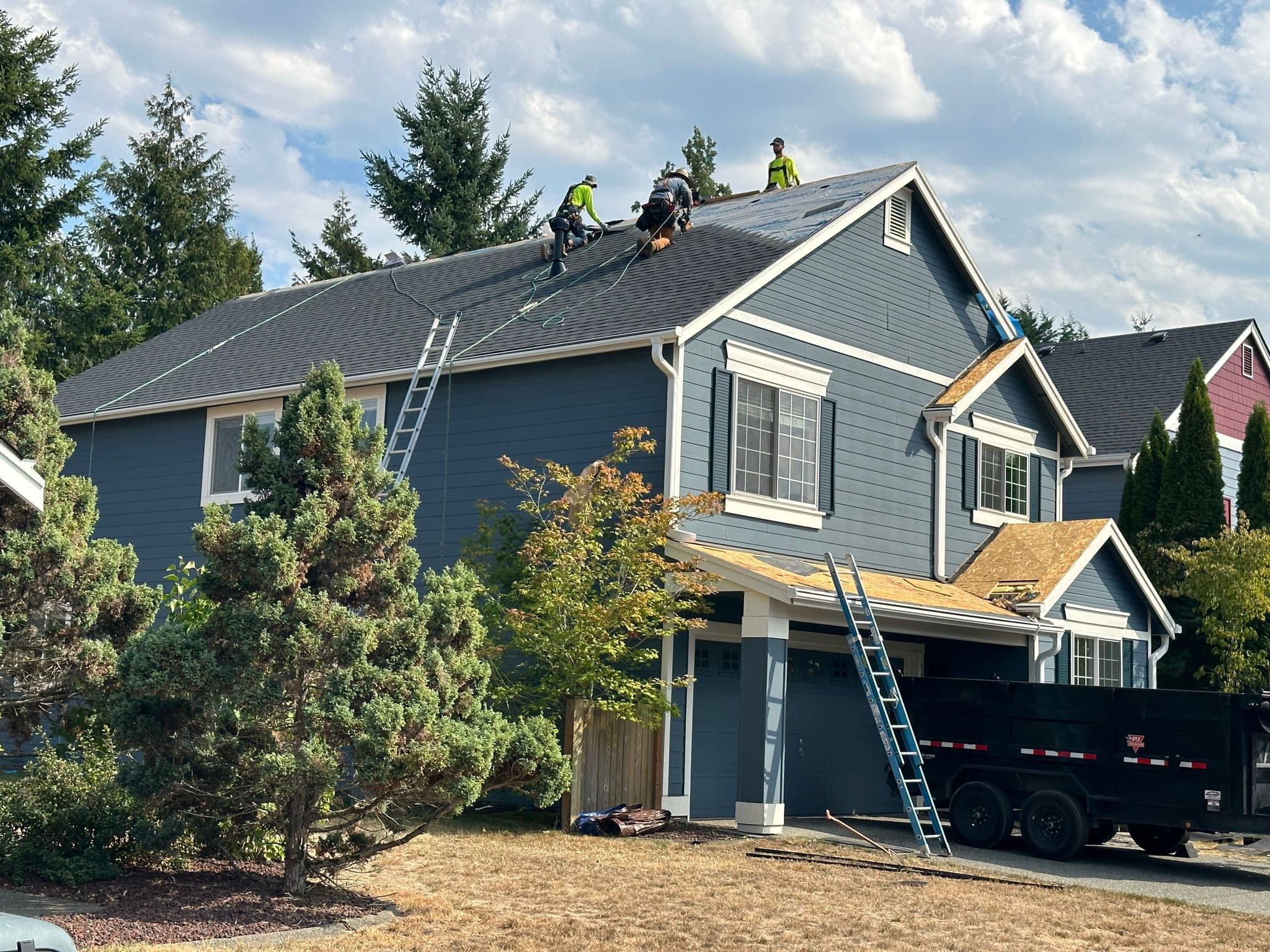
A PVC roofing membrane is a single-ply sheet of polyvinyl chloride installed over flat and low-slope roofs, with seams typically joined by hot-air welding instead of glue. King Roof Care works with PVC roofing systems and repairs flat roofs with ponding water and membrane issues across Kirkland, Bothell, Everett, Issaquah and Redmond, WA. Free, no-obligation roof assessments are available before any work begins.
What a PVC Roofing Membrane Is and Where It Fits
A PVC roofing membrane is a flexible, factory-made sheet of polyvinyl chloride that covers a flat or low-slope roof in one continuous waterproof layer. The sheets arrive in rolls, are laid over insulation or a prepared deck, and are fused together at the overlaps.
PVC Roofing Membrane Installation Methods Compared
PVC roofing membranes are attached to the roof in one of several ways, and manufacturers such as Sika and Carlisle publish separate systems for each method. The right method depends on the deck, the existing roof, wind exposure and the building's structure, which is why the attachment choice should come from an on-site inspection rather than a catalog.
| Method | How the membrane is held | General trade-offs to discuss |
|---|---|---|
| Fully adhered | Bonded to the substrate with adhesive; some products use a fleece backing | Smooth finished look and no fasteners through the sheet; needs a clean, compatible substrate and suitable weather for adhesives |
| Mechanically attached | Screws and plates in the seam overlaps, covered by the next sheet | Less adhesive work; fastener pattern depends on deck type and wind exposure |
| Induction welded | Plates fastened under the membrane, then bonded to it with an induction tool | No fasteners penetrating the top sheet; requires specialized equipment |
| Ballasted | Loose-laid and held down with stone or pavers | Fast to lay; adds weight the structure must be able to carry |
Advantages and Downsides of a PVC Roofing Membrane
The advantages of a PVC roofing membrane come mostly from welded seams and a reflective surface. Manufacturers highlight resistance to heat and UV, energy savings from a light-colored surface, long-term performance and easy repair, because new PVC can be welded to clean existing PVC.
- Advantage: hot-air welded seams that become part of the sheet
- Advantage: light, reflective surface on most products
- Advantage: repairs can often be made by welding in a patch of matching PVC
- Downside: welding requires trained installers and calibrated equipment; poor welds are a common source of leaks
- Downside: PVC can react with some other materials, such as certain asphalt-based products, so manufacturers may call for separation layers or specific compatible products
- Downside: older or weathered membranes can become harder to weld, which may limit repair options
- Downside: cost and availability vary by product, so compare quotes rather than assuming one material is always cheaper
PVC vs EPDM and Other Flat Roof Membranes
Choosing between a PVC roofing membrane and EPDM comes down to seams, surface color and the details of your roof. Neither material wins on every roof; the condition of the deck, the number of penetrations and how the roof drains matter as much as the membrane itself.
| Factor | PVC | EPDM | TPO |
|---|---|---|---|
| Material type | Thermoplastic (polyvinyl chloride) | Synthetic rubber | Thermoplastic polyolefin |
| Typical seam method | Hot-air welded | Tape or adhesive | Hot-air welded |
| Common surface color | Light/white | Black (other colors available) | Light/white |
| Repair approach | Weld a PVC patch to clean membrane | Primer and compatible patch or tape | Weld a TPO patch to clean membrane |
| Key question to ask | Which compatible products and details touch the membrane? | How are seams and penetrations sealed? | Which product line and thickness is quoted? |
How to Fix a Leaking PVC or Membrane Roof
Fixing a membrane roof starts with finding where water actually gets in, because the stain on the ceiling is often not under the hole. Water can travel under insulation before it shows up indoors. Our guide on how to find a roof leak explains what to note before calling a roofer.
- Locate the entry point: open seams, punctures, failed flashing at walls and penetrations, or areas where water ponds
- Clean and prepare the membrane around the damage so new material can bond
- Weld a patch of compatible PVC over small punctures or open seams, following the manufacturer's instructions
- Rework flashing at curbs, vents, skylights and walls where the membrane turns up
- Address ponding by checking drains and slope, since standing water keeps stressing the same spot
- Replace sections or the whole roof when the membrane is too weathered to weld or the insulation below is saturated
PVC Roofing Membrane Cost: A National Planning Range
No King Roof Care price for a PVC roofing membrane is published, so the only number here is a national planning reference, not a quote. According to homewyse.com, "In September 2026 the estimated national average cost to Install a Membrane Roofing System starts at $8.23 - $10.54 per square foot*."
That national range covers membrane roofing systems in general, not PVC specifically, and it does not reflect a local Kirkland, Bothell, Everett, Issaquah or Redmond job. Tear-off of the old roof, deck repairs, insulation, flashing details, access and the attachment method can all move the final figure.
What to Ask in a PVC Roofing Estimate and Mistakes That Cause Rework
A PVC roofing estimate is easier to compare when every bid answers the same questions. Two quotes that both say "PVC roof" can describe very different systems, so ask each roofer to put the details in writing.
- Ask: Which PVC product line and thickness is included?
- Ask: Will the old roof be removed, and how will the deck be checked and repaired?
- Ask: Which attachment method is planned, and why does it suit this deck?
- Ask: How are walls, curbs, vents, skylights and drains flashed?
- Ask: What is done about areas where water ponds today?
- Ask: Who prepares the written scope, and does it list every material?
- Mistake: covering wet insulation or a damaged deck with new membrane
- Mistake: patching PVC with incompatible tars or sealants
- Mistake: ignoring drainage, so water keeps ponding on the new roof
- Mistake: rushing flashing at penetrations, where many membrane leaks start
- Mistake: comparing quotes by price alone without matching scope
PVC Roofing Membrane Service in Kirkland, Bothell, Everett, Issaquah and Redmond, WA
King Roof Care, a locally owned and operated company, offers roof repair, replacement, inspection and storm damage repair in Kirkland, Bothell, Everett, Issaquah and Redmond, WA, and works with PVC as well as composition, asphalt shingle, wood shake, presidential shingle and metal roofing systems. The company is rated 4.9 out of 5 on Google (as of 2026-10-19).
Frequently asked questions
What is a PVC roofing membrane?
A PVC roofing membrane is a single-ply sheet of polyvinyl chloride used to waterproof flat and low-slope roofs. The sheets are laid in rolls and their overlaps are typically fused with hot-air welding, so the seams become part of the membrane.
What are the downsides of PVC roofing?
The downsides of PVC roofing include the need for trained installers and proper welding equipment, possible incompatibility with some other materials such as certain asphalt-based products, and weathered membranes that can be harder to weld during repairs. Cost varies by product, so compare written quotes.
How long does a PVC membrane roof last?
How long a PVC membrane roof lasts depends on the product, installation quality, drainage and maintenance, so no single figure applies to every roof. Ask for the manufacturer's data on the specific membrane quoted and schedule periodic inspections to catch seam and flashing issues early.
Which roofing membrane is better, EPDM or PVC?
Neither EPDM nor PVC is better on every roof. PVC has heat-welded seams and is usually light-colored, while EPDM is a rubber membrane with taped or adhered seams. The right choice depends on the deck, penetrations, drainage and budget, which an on-site inspection can clarify.
How to fix membrane roofing
Fixing membrane roofing starts with locating the real entry point, then cleaning the area and applying a compatible patch; on PVC, that patch is typically heat-welded. Flashing and ponding problems should be corrected too. Because of fall risk and material compatibility, have a professional roofer make the repair.