

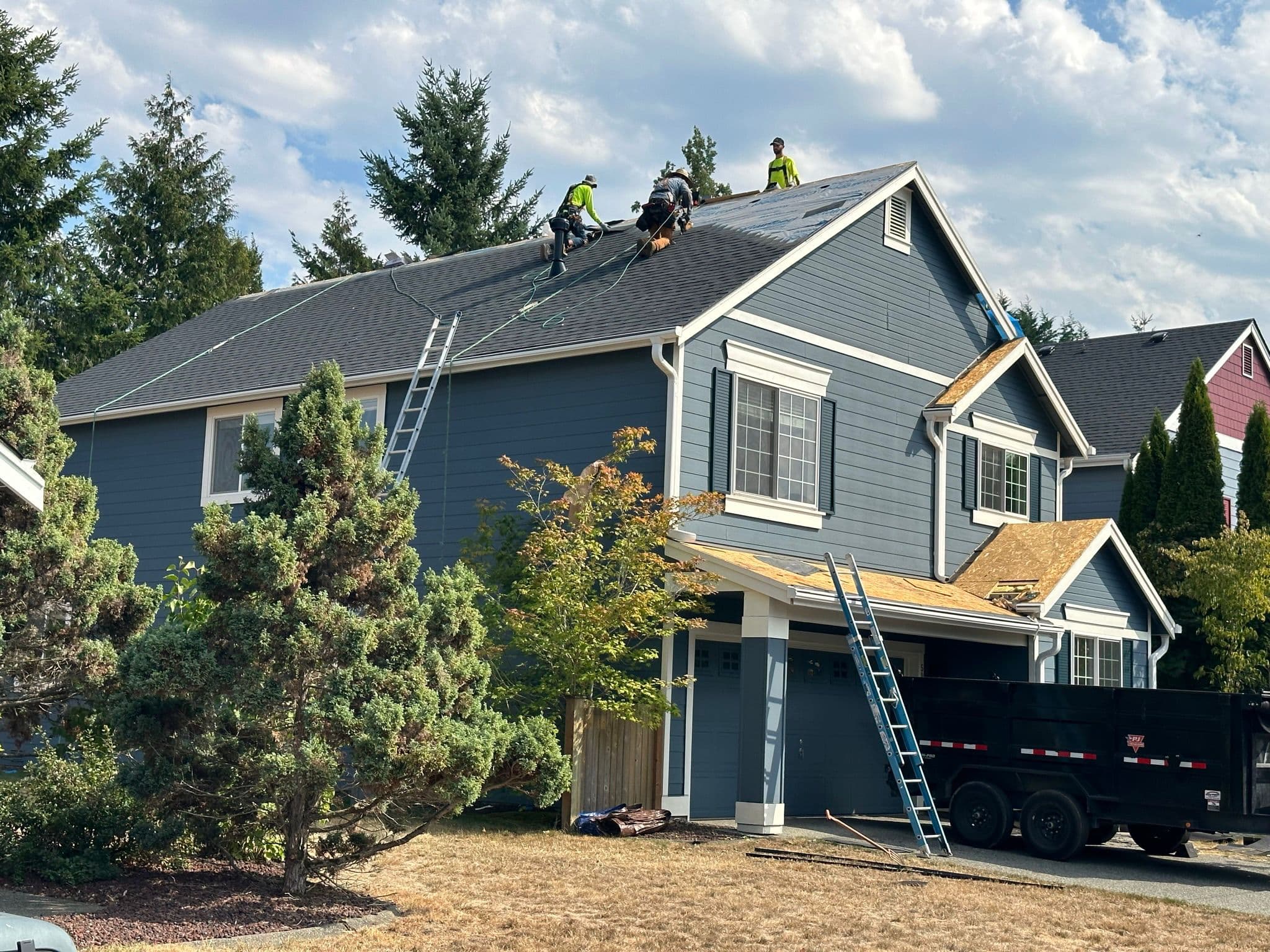
A membrane roof is a continuous waterproof sheet, such as EPDM rubber, TPO, PVC or modified bitumen, used on flat and low-slope roofs. King Roof Care repairs flat roofs with membrane and ponding-water problems and lists PVC among its roofing systems across Kirkland, Bothell, Everett, Issaquah and Redmond, WA. EPDM, TPO and modified bitumen installation are not confirmed on its site, so ask when you request a free estimate.
What Is a Membrane Roof?
A membrane roof is a roofing system that covers a flat or low-slope deck with one continuous waterproof layer instead of overlapping pieces like shingles. On a low-slope surface, water drains slowly, so the membrane has to keep water out rather than simply shed it downhill.
EPDM vs. TPO vs. PVC vs. Modified Bitumen
Comparing membrane roof materials side by side is the quickest way to see why contractors may recommend different systems for different roofs. The table below summarizes how each membrane is built and joined, and which ones King Roof Care lists on its site.
| Membrane | Family | How seams are joined | Typical traits | Listed by King Roof Care? |
|---|---|---|---|---|
| EPDM | Thermoset (synthetic rubber) | Adhesives or seam tape | Flexible rubber sheet, often black | Not confirmed; ask |
| TPO | Thermoplastic | Hot-air welded | Usually white or light-colored | Not confirmed; ask |
| PVC | Thermoplastic | Hot-air welded | Often chosen near grease or chemical exposure | Yes, PVC roofing systems are listed |
| Modified bitumen | Asphalt-based with polymers | Torch, cold adhesive or self-adhered laps | Rolled sheets, related to built-up roofing | Not confirmed; ask |
Membrane Roof Repair: Common Problems on Flat Roofs
Membrane roof repair starts with finding where water actually enters, because on a flat roof the stain on the ceiling can appear some distance from the opening. A single stain or a single water test does not confirm the source by itself, so a careful look at the whole roof surface matters.
- Ponding water that sits on the surface after rain instead of draining
- Seams that have opened, lifted or separated at the edges
- Punctures or cuts from foot traffic, dropped tools or debris
- Flashing that has pulled away at walls, vents, skylights or chimneys
- Blisters or bubbles where the membrane has separated from the layer below
- Overflowing or clogged drains and gutters that back water onto the roof
Repair or Replace a Membrane Roof? A Decision Checklist
Deciding between membrane roof repair and replacement is easier with a short checklist you can walk through before and during an inspection. No single item decides the answer; the pattern across the list is what points one way or the other.
- Is the leak tied to one spot, such as a single seam or vent, or are there several unrelated wet areas?
- Does water pond in the same low areas after every rain, suggesting a drainage or deck problem rather than a surface tear?
- Are seams lifting along long runs of the roof, not just in one corner?
- Does the deck feel soft or spongy underfoot, which can point to trapped moisture below the membrane?
- Has the roof already been patched several times in different places?
- Would a repair require a different material than the existing membrane, creating a compatibility question?
- Are you planning other roof work, such as a skylight, that would be easier to coordinate with new roofing?
Membrane Roof Cost: A National Planning Range
Membrane roof cost varies with the size of the roof, the material, the condition of the deck and how many penetrations need detailing, so a sourced national figure is useful only as a starting point for budgeting.
According to homewyse.com, "In September 2026 the estimated national average cost to Install a Membrane Roofing System starts at $8.23 - $10.54 per square foot*." That is a national planning range from homewyse, not a King Roof Care price, and no sourced figure is available here for membrane roof repair specifically.
- Which membrane is specified and how it is attached to the deck
- Whether the existing roof is removed or other layers stay in place
- Condition of the deck and any sheathing that needs replacing
- Number of vents, skylights, walls and other penetrations to flash
- Drainage changes needed to deal with ponding water
- Access to the roof and how materials reach it
What to Ask and Compare in a Membrane Roof Estimate
A membrane roof estimate is easiest to compare when every contractor answers the same questions in writing. Matching line by line shows whether two quotes actually describe the same job.
Before signing with any contractor, check registration with Washington's Department of Labor & Industries. King Roof Care is a registered Washington construction contractor, L&I registration KINGRRC782QA, which you can verify at lni.wa.gov.
- Which membrane type and which attachment method are specified?
- Is the existing roofing removed, and what happens to the material taken off?
- How will the deck be checked, and how is damaged sheathing handled if found?
- How are seams joined, and how are walls, vents and skylights flashed?
- What is planned for any area where water ponds today?
- Are gutters, drains and edge details included or priced separately?
- Who is your point of contact while the work is underway?
Membrane Roof Mistakes That Lead to Rework, and How to Prepare
Membrane roof rework often comes from decisions made before anyone climbs a ladder, so knowing the common missteps can save a second visit. The mistakes below are worth avoiding whether you are planning a repair or a new roof.
- Patching with a material that is not compatible with the existing membrane
- Sealing over a seam without finding why it opened in the first place
- Treating a ceiling stain as the exact location of the leak
- Ignoring ponding water and hoping a new surface will solve it
- Walking on the roof often or storing items on it, which can puncture the sheet
- Letting gutters and drains clog so water backs up onto the membrane
- Note when leaks appear, such as during heavy rain or only in wind-driven storms
- Photograph ceiling stains and any water on the roof after rain, if safely visible
- Clear access to the attic or ceiling area below the flat roof section
- Gather any records of past repairs and the membrane type, if known
- List other work you are considering, such as gutter or skylight changes