

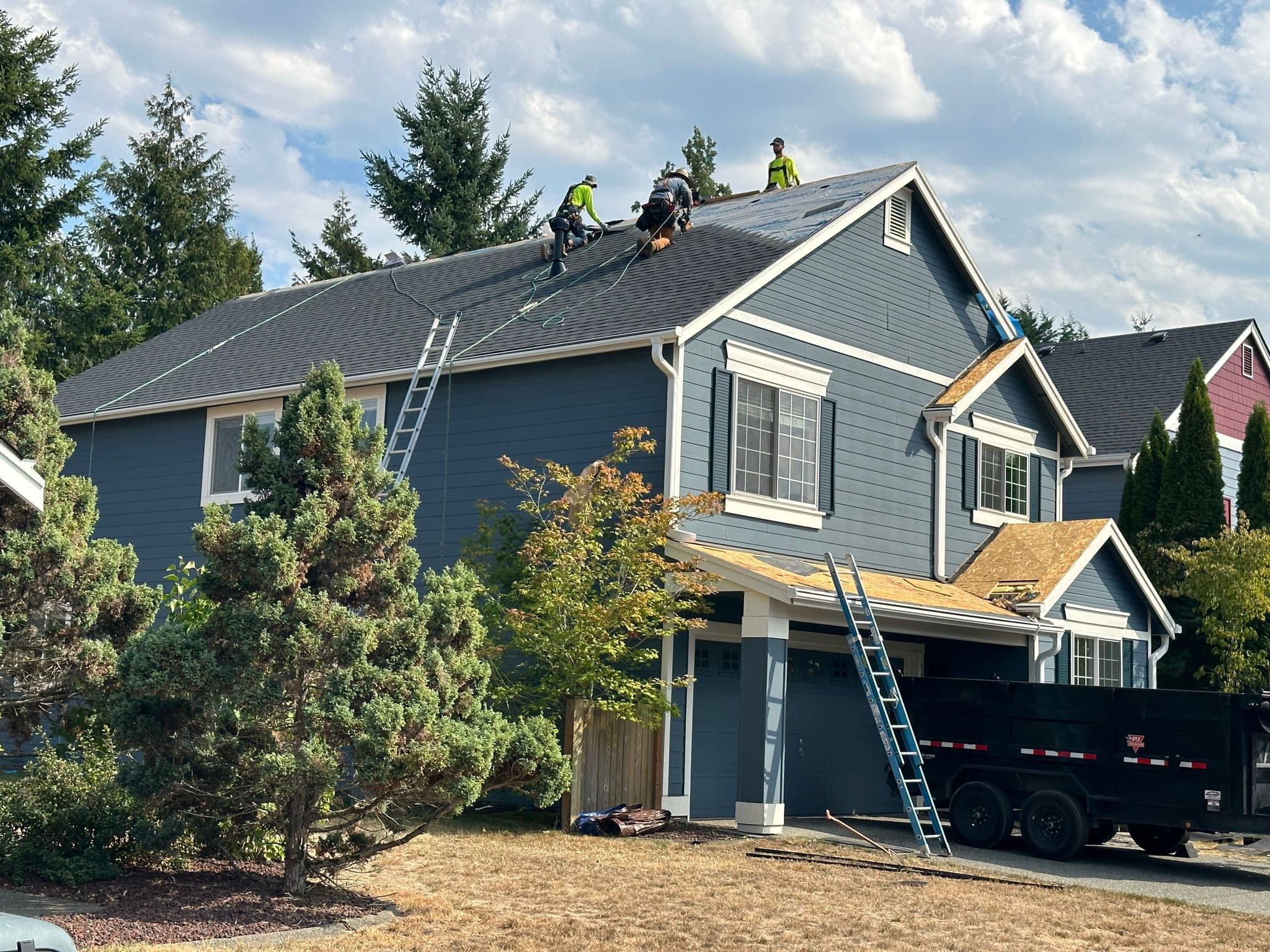
Gable flashing is the metal that protects a roof's sloped gable (rake) edge and any line where a gable roof meets a wall. King Roof Care provides roof repair, replacement and inspection in Kirkland, Bothell, Everett, Issaquah and Redmond, WA. Its listed flashing work covers valleys, walls, chimneys and other penetrations, so ask about gable-edge details during a free roof assessment.
What gable flashing does on a gable roof
Gable flashing refers to the metal pieces that seal the edges of a gable roof, the triangular end of the house where the roof slope runs down the rake rather than along the gutter line. Roofers also call it gable end flashing, rake flashing or rake edge trim. Its job is to keep wind-driven water from getting under the roofing at the edge and soaking into the sheathing, fascia or the top of the siding.
Gable roof flashing types compared
Gable roof flashing comes in a few distinct forms, and the right one depends on where the edge is and what roofing sits above it. The table below compares the common pieces by location and purpose. It does not rank materials by cost or lifespan, because those depend on the product and the roof.
| Flashing piece | Where it goes | What it does | Common question |
|---|---|---|---|
| Rake / gable trim | Along the sloped gable edge | Covers the deck edge and directs water off the rake | Should it match the roofing or the trim color? |
| Drip edge | At eaves and, on many roofs, along rakes | Kicks water away from fascia and sheathing | Does it go over or under the underlayment here? |
| Step flashing | Where a sloped roof meets a sidewall | Overlapping pieces woven in with each shingle course | Was it reused or replaced? |
| Counterflashing | Over the top of step flashing on masonry or some walls | Laps over the step pieces so water stays outside | Is it cut into the wall or surface-mounted? |
| Kickout flashing | Bottom of a roof-to-wall line, at the gutter end | Turns wall runoff into the gutter instead of the siding | Is there one where the wall ends? |
| Metal roof rake trim | Gable edge of a metal panel roof | Closes the panel edge and resists wind uplift | Is the trim made for that panel profile? |
How a gable roof is flashed to a wall (general guidance)
Flashing a gable roof to a wall follows a layered order, and the sequence below is general guidance only, not a set of DIY instructions. Roof-to-wall work happens on a slope and often near siding that has to be opened, so follow the roofing and flashing manufacturer's instructions or have a roofer do it. Confirm permit needs with the City of Kirkland, or the city where the house sits, before work starts.
- Underlayment is run up the wall a short distance so the deck edge is covered before any metal goes on.
- Step flashing is installed one piece per shingle course, each piece overlapping the one below and tucked under the next shingle.
- The wall's weather barrier or house wrap is lapped over the vertical leg of the step flashing, not tucked behind it.
- Siding or trim is brought down over the flashing, leaving a gap above the roof surface as the siding maker specifies.
- On masonry, counterflashing is added over the step pieces to shed water from the wall face.
- At the low end of the wall, a kickout piece turns the water into the gutter rather than down the siding.
- Along open rakes, edge metal is placed in the order the roofing manufacturer specifies relative to the underlayment.
Signs gable end flashing needs attention
Gable end flashing problems tend to show up as small symptoms near the edge of the roof or on the wall below a roof junction. None of these signs alone proves the flashing has failed, but each is worth a closer look, ideally from the ground or during a professional inspection rather than from a ladder.
- Rake trim that is bent, loose, missing or pulled away from the roof edge after wind
- Shingles along the gable edge that are lifted, cracked or missing
- Gaps, rust or old sealant patches where the roof meets a wall or dormer
- Stained or soft siding and trim directly below a roof-to-wall line
- Water running down the siding at the bottom of a sidewall instead of into the gutter
- Peeling paint or dark streaks on the fascia and barge boards along the rake
How King Roof Care handles flashing in repair and replacement
King Roof Care's documented roofing process starts with an on-site inspection of the roof, the attic and the ventilation, noting anything that affects the work. A written estimate with the exact scope and materials follows before any work starts. That estimate is the place to confirm whether gable edges, rake trim and roof-to-wall lines are included.
What to ask and compare in a gable flashing estimate
A gable flashing estimate is easier to compare when every bid answers the same questions in writing. Two quotes that look similar can differ in whether flashing is replaced or reused, whether siding is opened at a wall line, and whether the rake edge is included at all. Use the checklist below with any roofer, including King Roof Care.
- Which edges are included: open rakes, roof-to-wall lines, dormers, or all of them?
- Will existing step flashing be replaced with new pieces, or reused?
- Will siding or trim be removed at the wall line, and who reinstalls or repaints it?
- What metal and finish will the rake trim and drip edge be, and does it suit the roofing type?
- Is a kickout piece included at the bottom of each roof-to-wall line?
- How will the edge metal be lapped with the underlayment?
- Will damaged sheathing at the edge be replaced if it is found during the work?
- How are gutters at the gable ends handled if they need to come off?
- Does the estimate list the exact scope and materials, rather than a single line item?
Mistakes at gable ends that cause rework
Gable flashing mistakes often stay hidden until the next heavy rain, which is why the same edge can leak again after a quick fix. Knowing the common errors helps homeowners read an estimate and ask the right questions before work begins.
Practical details for homeowners across the service area
King Roof Care's office is at 11400 NE 132nd St, Kirkland, WA 98034, and the company describes itself as locally owned and operated. Its roofing services cover Kirkland, Bothell, Everett, Issaquah and Redmond, WA, and its wider service list also names Seattle, Bellevue, Sammamish, Mercer Island, Kent, Auburn, Kenmore, Woodinville, Lynnwood and Renton.
Frequently asked questions
What are gable flashings?
Gable flashings are the metal pieces that seal a gable roof's edges: rake trim or drip edge along the sloped gable edge, and step flashing, counterflashing and kickout pieces where a gable roof meets a wall. Together they keep wind-driven rain from getting under the roofing at those edges.
How to flash a gable roof to a wall?
Flashing a gable roof to a wall generally means running underlayment up the wall, installing one step flashing piece per shingle course, lapping the wall's weather barrier and siding over the flashing, and adding a kickout at the bottom. Follow the manufacturer's instructions or use a roofer, and confirm permit needs with your city before work starts.
What is gable rake flashing used for?
Gable rake flashing is used to cover and protect the sloped edge of a gable roof. It closes off the deck edge, directs water away from the fascia and barge boards, and helps hold the roofing edge against wind.
Do I need a drip edge on gable ends?
Whether you need a drip edge on gable ends depends on your roofing manufacturer's installation instructions and local requirements, so check both. Edge metal along the rakes protects the deck edge and fascia; confirm permit needs with the City of Kirkland, or your own city, before work starts, and ask that the estimate state how the rakes will be finished.