
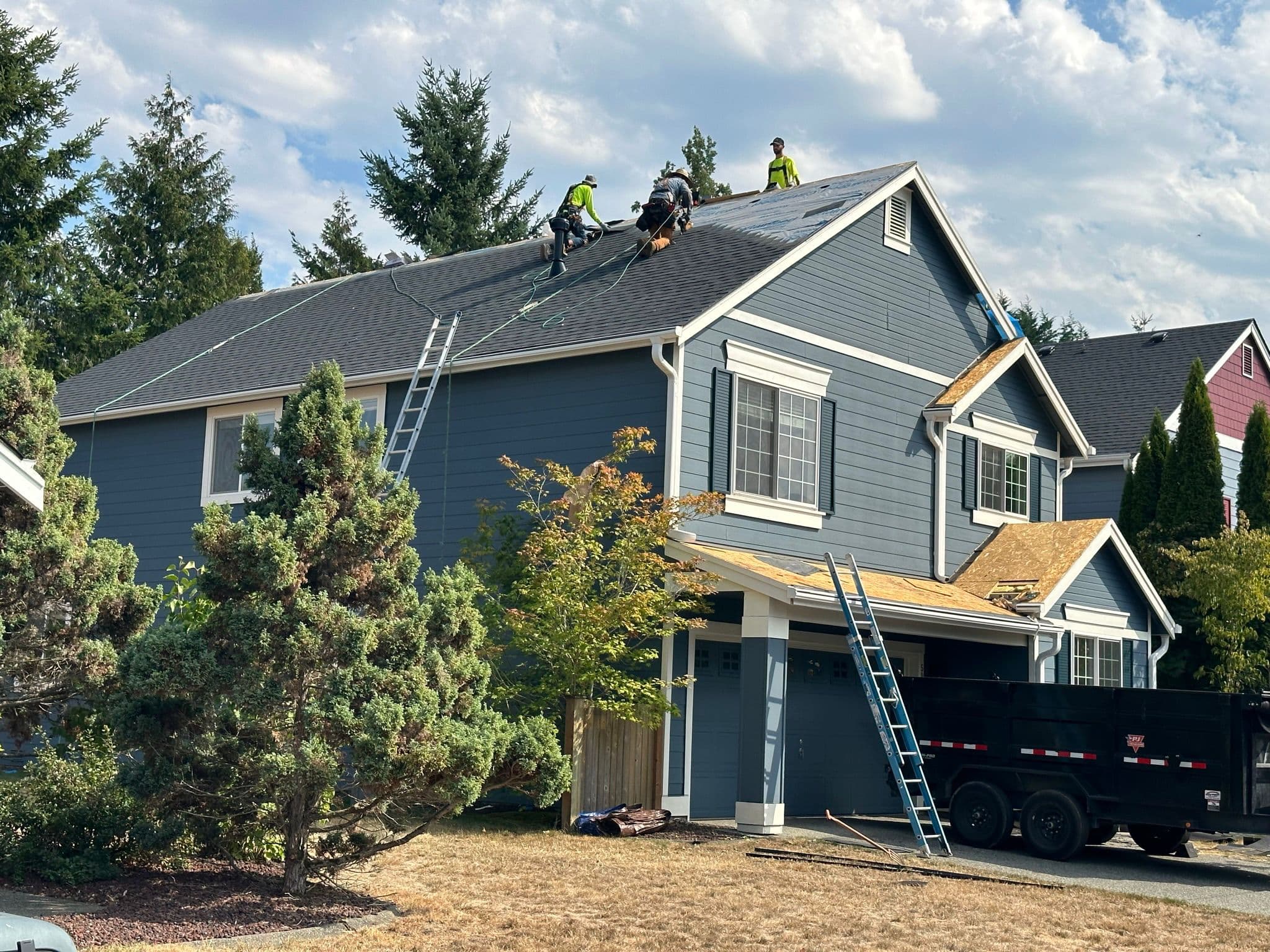
A flat roof patch can work when damage is small and localized: a puncture, a short seam split or a lifted flashing edge on a membrane that is otherwise sound. King Roof Care repairs flat roofs with ponding water and membrane issues across Kirkland, Bothell, Everett, Issaquah and Redmond, WA. This guide covers how a patch is done, when a patch is the wrong fix, and what a repair estimate should list.
Common Flat Roof Problems That Call for a Patch
Flat roof leaks can start in several different places on a low-slope roof, and knowing which one you have decides whether a patch is enough or whether a larger repair is needed.
- Ponding water: water that stays in low spots after rain keeps the membrane wet and puts steady pressure on seams and old patches.
- Punctures and cuts: dropped tools, foot traffic, falling branches or debris can open the membrane.
- Seam separation: lap joints between membrane sheets can open and let water underneath.
- Blisters and bubbles: raised areas can indicate trapped moisture or air below the surface and deserve a closer look before patching.
- Flashing failures: lifted or cracked flashing at walls, vents, chimneys and skylights.
- Clogged drains, scuppers and gutters: blocked outlets hold water on the roof longer than it should stay there.
Fixing a Flat Roof Leak Yourself: Tools, Materials and Steps
Fixing a flat roof leak yourself is realistic only for a small, clearly visible puncture or tear on a membrane you can identify, and only when you can work safely at height.
- Pick a dry day and stay off a wet, icy or slick surface.
- Identify the membrane: PVC, EPDM rubber, modified bitumen or built-up roofing. Patch products are made for specific membranes, and a mismatch may not bond.
- Find the actual entry point, not just the spot above the interior stain.
- Clean the area: remove dirt, gravel, moss and loose old sealant, then let the surface dry fully.
- Cut the patch with rounded corners so it extends past the damage on every side, using the overlap the product calls for.
- Apply primer or adhesive if the instructions require it, set the patch, and roll it firmly to push out air.
- Seal the patch edges if the product specifies an edge sealant.
- Check the spot from the roof and from inside after the next rain.
Patch, Recover or Replace: A Flat Roof Repair Decision Checklist
A flat roof repair decision comes down to one question: is the damage isolated, or is it a sign that the whole membrane is wearing out?
- A patch may fit when there is one clear puncture, tear or short seam opening, and the membrane around it is flexible and firmly attached.
- A broader repair may fit when several seams are opening, flashing has failed at more than one penetration, or water ponds in the same low area after every rain.
- Replacement is worth discussing when the surface feels soft or spongy, patches keep failing in new places, blisters are widespread, or the membrane is cracked across large areas.
- Any sagging spot points to the structure, not just the membrane, and needs a professional look before anyone patches over it.
Flat Roof Patch Options Compared
Flat roof patch options differ in where they fit and what can go wrong, and the right choice depends on the membrane, the size of the damage and the condition of the layers underneath.
| Patch option | Where it fits | Trade-off to weigh |
|---|---|---|
| Matching membrane patch (same material as the roof) | Punctures, tears and short seam splits on an otherwise sound membrane | Must be bonded or welded the way the membrane maker specifies |
| Liquid-applied coating or sealant | Small cracks and awkward shapes such as pipe bases | Needs a clean, dry, compatible surface; can cover up a wet layer beneath |
| Roof cement or mastic | Emergency stopgap while a leak is active | Messy, and has to be removed before a proper membrane repair |
| Flashing repair or replacement | Leaks at walls, vents, chimneys and skylights | The surrounding membrane has to be opened and resealed correctly |
| Section repair | Larger damaged areas or wet insulation | Larger scope that can involve deck work |
What a Flat Roof Repair Estimate Should List
A flat roof repair estimate is easier to compare when every contractor puts the same items in writing, so you can see what is included and what is not.
For budgeting only, homewyse.com gives national planning ranges, not King Roof Care prices. In September 2026, homewyse listed the estimated national average cost to repair storm damaged roofing at $9.20 - $11.62 per square foot, and the cost to install a membrane roofing system at $8.23 - $10.54 per square foot. Your written estimate is the number that applies to your roof.
- Leak source: where water is getting in and how it was located.
- Membrane type and the exact patch or repair material to be used.
- Prep work: cleaning, removing old patches, mastic or loose gravel.
- Size of the repair area.
- Hidden damage: how wet insulation or damaged decking will be handled and priced if found.
- Flashing work at walls, vents, chimneys or skylights.
- Drains, scuppers and gutters: whether clearing or repair is included.
- Disposal and cleanup.
- Excluded items, written plainly.
- Permits: confirm permit needs with the City of Kirkland, Bothell, Everett, Issaquah or Redmond before work starts.
Flat Roof Patch Mistakes That Cause Rework
Flat roof patch mistakes tend to show up as the same leak coming back after the next storm, and each one below can turn a small repair into a second visit.
- Patching the spot above the ceiling stain instead of the actual entry point.
- Applying a patch over dirt, gravel, moss or a damp surface, which can keep it from bonding.
- Mixing products that are not compatible; some asphalt-based products are not meant for some single-ply membranes, so check the label.
- Stacking layer after layer of sealant on the same spot instead of repairing the membrane.
- Ignoring the ponding that caused the wear in the first place.
- Patching over a soft or spongy area that may hide wet insulation or decking damage.
- Leaving drains, scuppers or gutters clogged after the repair.
Flat Roof Maintenance Between Repairs
Flat roof maintenance keeps small problems small, and most of it can be done from a safe vantage point or during a scheduled inspection.
- Clear leaves, branches and debris off the roof surface.
- Keep drains, scuppers and gutters open so water can leave the roof.
- Look for new ponding, blisters or open seams after heavy storms.
- Check flashing at walls, vents, chimneys and skylights for lifting or cracks.
- Watch interior ceilings and walls under the roof for new stains.
- Keep foot traffic on the roof to a minimum.
When to Call a Flat Roof Repair Company in Kirkland, Bothell, Everett, Issaquah or Redmond
A flat roof repair company is the safer call when you cannot find the leak source, when the roof feels soft, when flashing or seams have failed in more than one spot, or when you cannot work on the roof safely.
The company says it contacts customers within 30 minutes of a quote request. King Roof Care is rated 4.9 out of 5 on Google (as of 2026-10-05) and is a registered Washington construction contractor, L&I registration KINGRRC782QA, which you can verify at lni.wa.gov.
Frequently asked questions
How can I repair a hole in my flat roof?
You can repair a small hole in a flat roof by finding the true entry point, cleaning and drying the area, and applying a patch made for your specific membrane, with rounded corners and overlap past the damage on all sides. If the area around the hole feels soft, or water has reached the insulation, a patch alone may not fix the problem and a professional assessment makes more sense.
How to fix flashing on roof?
Fixing flashing on a roof starts with finding where it has lifted, cracked or pulled away from a wall, vent, chimney or skylight, then resealing or replacing that section so it laps correctly with the roof surface. The right method depends on the roof material and the type of flashing. King Roof Care repairs flashing around chimneys, vents and skylights.
Does flex seal work on flat roofs?
Whether Flex Seal works on a flat roof depends on the roof membrane, the condition of the surface and the manufacturer's directions for that product, so check the label for compatibility with your roof material first. Any spray or liquid sealant applied over a wet or failing membrane can hide the leak source instead of fixing it.
How to replace a flat roof yourself?
Replacing a flat roof yourself is a large project that involves tearing off the old roofing, inspecting the deck and replacing damaged sheathing, installing the new membrane to the maker's instructions, and flashing every wall and penetration. It also means extended work at height. Confirm permit needs with your city before work starts, and get a written estimate from a roofer to compare against the cost and risk of doing it yourself.