
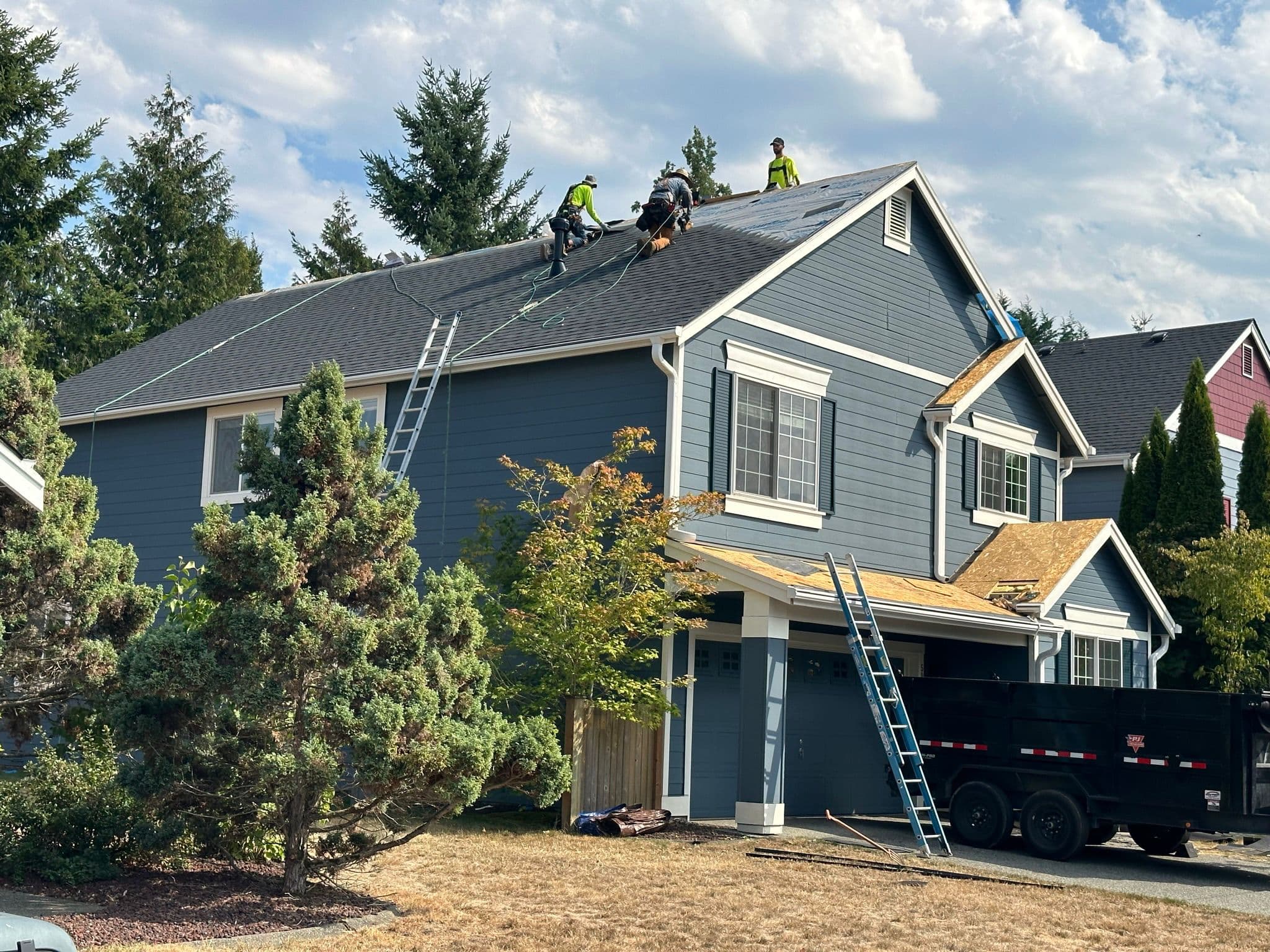
To fix a roof leak, first protect the inside of the home. Then trace the water to its true entry point on the roof and repair that spot, whether it is flashing, shingles, a vent boot or a gutter, rather than only sealing where it drips. King Roof Care handles roof leak repair across Kirkland, Bothell, Everett, Issaquah and Redmond, WA, starting with a free roof assessment.
Signs of a Leaking Roof Inside and Outside the Home
A leaking roof does not always show up as an obvious drip. The early signs of roof leakage can be quiet, and they are easy to mistake for a cosmetic problem. Check the inside of the home first, then look at the roof from the ground.
- A wet patch on the ceiling, or a brown or yellow water stain that grows after rain
- Peeling paint, bubbling drywall or damp spots on the upper part of walls
- A damp or musty smell in the attic or in upstairs rooms
- Wet insulation, dark stains on attic sheathing or water marks running down rafters
- Daylight showing through the roof boards when you look up from the attic
- From the ground, use binoculars to spot missing, cracked or curled shingles
- Lifted, bent or rusted flashing around chimneys, vents and skylights
- Shingle granules collecting in gutters or at the bottom of downspouts
- Gutters that overflow, sag or pull away from the fascia
- Debris or moss building up in roof valleys, where two roof slopes meet
What to Do First When Your Roof Is Leaking
When a roof is leaking, the first job is protecting the inside of the home, not climbing onto the roof. Water damage to drywall, insulation and floors can grow quickly, so slow it down before you think about repairs.
How to Find Where a Roof Leak Is Coming From
Finding the source of a roof leak takes patience, because water can travel along rafters, sheathing or underlayment before it drips onto a ceiling. The stain you see indoors is often downhill from the real entry point.
- Flashing where the roof meets chimneys, walls, dormers and skylights
- Rubber or metal boots around plumbing vent pipes
- Valleys, where water from two slopes concentrates
- Missing, cracked or lifted shingles, and exposed nail heads
- Eaves where clogged gutters can back water up under the roof edge
- Siding, windows and trim near the roofline, which can let water in and look like a roof leak
- Seams, fasteners and panel laps on metal roofs
- Low spots on flat roofs where water ponds against the membrane
Temporary Fixes to Stop a Roof Leak Until It Can Be Repaired
Temporary roof leak fixes buy time, but none of them replaces a proper repair of the damaged roofing. Use them to keep water out until the source can be fixed, and only when you can work safely.
| Temporary fix | Where it can help | Limitations |
|---|---|---|
| Tarp anchored over the damaged area | Larger damage, missing shingles, storm openings | Needs safe roof access; wind can lift a poorly secured tarp |
| Roofing tape | Small holes or cracks, sometimes applied from the attic side | Needs a clean, dry surface to stick well |
| Roofing cement | Small cracks and gaps at shingles or flashing edges | Can mask the true entry point if spread widely |
| Heavy plastic sheeting | Small holes when a tarp is not on hand | Less durable than a roofing tarp |
| Exterior caulk or sealant | Hairline gaps around vents and trim | Not a substitute for damaged flashing or shingles |
| Wet-surface or water-activated patch products | Active leaks when the surface cannot dry | Short-term only; follow the product directions |
Roof Leak Repair vs. Roof Replacement: How to Decide
Choosing between a roof leak repair and a roof replacement depends on how widespread the damage is, not only on how bad one leak looks. A single failed vent boot on a sound roof is a different job from leaks showing up in several places at once.
| What you find | Repair often fits | Replacement may be worth discussing |
|---|---|---|
| One leak at a chimney, vent or skylight | Yes: rework or replace the flashing or boot | Rarely, unless the rest of the roof is failing |
| A few missing shingles after a storm | Yes: replace the shingles and check the underlayment | If shingle damage is spread across many slopes |
| Leaks in several unrelated spots | Possible, case by case | Yes, worth comparing both options |
| Soft, sagging or rotted decking | Local deck repair if the damage is contained | If damage covers large sections |
| Widespread curling, cracking or granule loss | Short-term patching only | Yes, worth comparing both options |
| Corrosion or damaged panels on a metal roof | Panel replacement and resealing if localized | If corrosion is widespread |
| Ponding water on a flat roof | Membrane repair if the area is small | If the membrane is failing across the roof |
Roof Leak Repair Step by Step: From First Call to Finished Fix
A professional roof leak repair generally moves from assessment to leak detection to estimate to repair, and the exact steps depend on the roof and the cause of the leak. The list below shows a typical sequence; where a step reflects something King Roof Care states on its website, that is noted.
- Request a quote. King Roof Care says it contacts customers within 30 minutes of a quote request.
- Assessment. King Roof Care provides free, no-obligation roof assessments before any work begins. A roofer typically looks at the roofing, flashing and drainage around the leak, and at the attic side when there is access.
- Leak detection. King Roof Care's roof repair services include leak detection, which aims to trace where water actually gets in, possibly some distance from the ceiling stain. No inspection can promise to find every cause on the first visit.
- Estimate. King Roof Care provides transparent estimates before any work begins. Ask any roofer to list the scope and materials in writing so you can compare quotes.
- Permit check. Confirm permit needs with your city, for example the City of Kirkland, Bothell, Everett, Issaquah or Redmond, before work starts.
- Repair. Depending on the cause, the work can include shingle replacement, flashing repair around chimneys, vents and skylights, metal roof panel replacement and sealing, flat roof membrane repair, or work on leaking, sagging or clogged gutters.
- Follow-up check. After the next heavy rain, look at the attic and the repaired ceiling area for fresh stains or damp insulation so any remaining entry point is caught early.
What to Compare in a Roof Leak Repair Estimate
Comparing roof leak repair estimates only works when each quote covers the same scope. A quick sealant patch and a full flashing rebuild can both be called a leak repair, yet they solve different problems. Ask each roofer to put these points in writing:
- Leak source: where the roofer believes the water enters, and how they found it
- Exact scope: which roof area and which components will be repaired or replaced
- Materials: shingle type, flashing material, vent boots, sealants and underlayment
- Hidden damage: how wet or rotted decking and sheathing will be handled and priced if found once the roofing is opened
- Flashing approach: replaced and reworked, or only sealed over
- Gutters and drainage: whether clogged or damaged gutters near the leak are included
- Disposal and cleanup: removal of old materials and debris
- Exclusions: interior drywall, paint, insulation or anything else the quote does not cover
- Contractor registration: King Roof Care is a registered Washington construction contractor, L&I registration KINGRRC782QA, which you can check with the Washington L&I verify tool
- Mistakes that cause rework: sealing the spot where water drips instead of the entry point uphill
- Mistakes that cause rework: smearing caulk over worn flashing instead of replacing it
- Mistakes that cause rework: patching shingles while clogged gutters keep pushing water under the roof edge
- Mistakes that cause rework: blaming the roof for attic condensation without checking ventilation
- Mistakes that cause rework: closing up a ceiling before the sheathing and insulation above it are dry
Preventing Future Roof Leaks in Kirkland, Bothell, Everett, Issaquah and Redmond
Preventing roof leaks comes down to routine checks that catch small problems before water reaches the ceiling. These habits apply to any roof, whatever its material:
- Clean gutters and downspouts so water drains away from the roof edge
- Look over the roof from the ground after strong storms, and book storm damage repair if shingles or flashing are missing
- Trim branches that rub against the roof or drop debris into valleys
- Keep valleys and the areas behind chimneys clear of leaves and moss
- Check vent pipe boots and skylight flashing for cracks or lifting
- Take a look in the attic after heavy rain for fresh stains or damp insulation
Frequently asked questions
Can I fix a leaking roof myself?
You can handle short-term steps for a leaking roof yourself, such as catching water indoors, moving belongings and covering a small area with a tarp or roofing tape when the roof is dry and safe to reach. A lasting fix means finding the true entry point and repairing the flashing, shingles or other parts that failed, which is where a roofer helps. Stay off wet, steep or high roofs, and call a professional if a ceiling is sagging.
How much will it cost to fix a roof leak?
The cost to fix a roof leak depends on the cause and the scope. Resealing or replacing a vent boot is a very different job from rebuilding chimney flashing or replacing wet decking. King Roof Care provides a free, no-obligation roof assessment and a transparent estimate before any work begins, so you can see the price for your specific roof.
How do you stop a leaking roof during heavy rain?
To stop a leaking roof during heavy rain, work from inside rather than on the roof. Catch drips with buckets, move belongings away, switch off power to any wet fixtures and, if it is safe, place a container under the drip in the attic. Once the rain stops and the roof is dry, a tarp or roofing tape can hold until a proper repair is made.